
Views: 0 Author: Site Editor Publish Time: 2026-01-23 Origin: Site


When it comes to shaping pipes for various industrial and construction projects, pipe benders are among the most essential tools in any professional's toolkit. While these tools are often associated with simple pipe bends, one common question that arises is whether pipe benders can be used to make a loop. In this article, we’ll explore what loop bending means, the different types of bends, and how to successfully create a loop using a pipe bender. We’ll also delve into the role of pipe tools in pipe bending and explain how Jiangsu Bohui’s high-quality products can help you achieve optimal results.
In the world of piping, "loop bending" refers to creating a circular or semi-circular bend in a pipe, forming a loop. This type of bend is essential in many industries, including HVAC systems, artistic metalwork, and structural applications. Loop bending ensures that pipes can fit into confined spaces or change direction without compromising the integrity of the system.
Loop bending is typically used in situations where pipes need to make a smooth, consistent curve. Common examples of where loop bending is required include:
HVAC systems: Pipes used in heating, ventilation, and air conditioning systems often need to be bent into loops to fit into tight spaces or to form part of a larger air or water circulation system.
Artistic metalwork: In design and sculpture, pipe benders are used to create decorative loops and curves for architectural installations or artistic pieces.
Structural frames: In construction, pipe benders are employed to bend pipes used in creating structural frames, ensuring they fit perfectly into pre-determined spaces.
Jiangsu Bohui’s pipe tools are designed to make loop bending an easy and efficient process, helping to ensure that your piping systems meet both functional and aesthetic requirements.
Understanding the progression of bends—from simple 45° bends to complex loops—can help you make the right decision when choosing a pipe bender.
A 90° bend is one of the most common types of bends made with pipe benders. This is the standard "elbow" type of bend that turns a pipe at a right angle. To make a 90° bend, a pipe bender applies consistent force along the pipe to create a smooth, clean bend. This type of bend is typically straightforward and can be achieved with both manual and hydraulic benders.
A U-bend is a 180° bend that turns the pipe completely back on itself, forming a "U" shape. This type of bend requires more careful control of the bending process to ensure that the pipe doesn't kink or collapse under the force. While manual benders can create U-bends, hydraulic benders or CNC benders are often better suited for larger pipes or when precision is critical.
A full loop or coil formation is more complex than a 90° bend or U-bend. This type of bend requires a continuous, smooth curve along the entire length of the pipe. Creating a loop involves several challenges, including maintaining a consistent bend radius and avoiding crimping or wrinkling of the pipe. For large loops, a hydraulic bender or CNC bender is usually required, as these tools provide the consistent force necessary to form the pipe into a perfect circle.
When it comes to creating loops with pipe benders, not all tools are created equal. Different tools are suited for different types of bends and materials. Here are the key considerations when selecting a tool for loop bending:
Manual Pipe Benders: While manual benders are excellent for simple bends, they may not have the capacity to create perfect loops, especially for larger pipes. These benders are suitable for small-scale projects or DIY tasks but can be limited in terms of precision and material handling.
Hydraulic Pipe Benders: Hydraulic benders use fluid pressure to generate bending force, allowing them to handle thicker pipes and produce more accurate bends. For loop bending, hydraulic benders are a good choice for medium to large pipes.
CNC Pipe Benders: Computer Numerical Control (CNC) pipe benders are the most advanced tools for pipe bending. They can create highly precise loops with consistent bend radii and angles. CNC benders are ideal for large-scale projects where accuracy and repeatability are crucial.
When creating a loop with a pipe bender, the bend radius plays a critical role. The bend radius refers to the radius of the curve made by the pipe. A larger radius makes the bend smoother, while a smaller radius results in a tighter curve. The bend radius should be selected carefully based on the pipe material and diameter. Additionally, springback compensation is necessary to account for the natural tendency of the pipe to straighten slightly after bending. Proper compensation ensures that the loop maintains its shape.
In some cases, creating a loop with a pipe bender requires specialized tooling. This is especially true when working with materials that have high tensile strength or when the bend needs to be very tight. Specialized dies and bending heads are used in these situations to ensure the pipe bends evenly without causing damage.
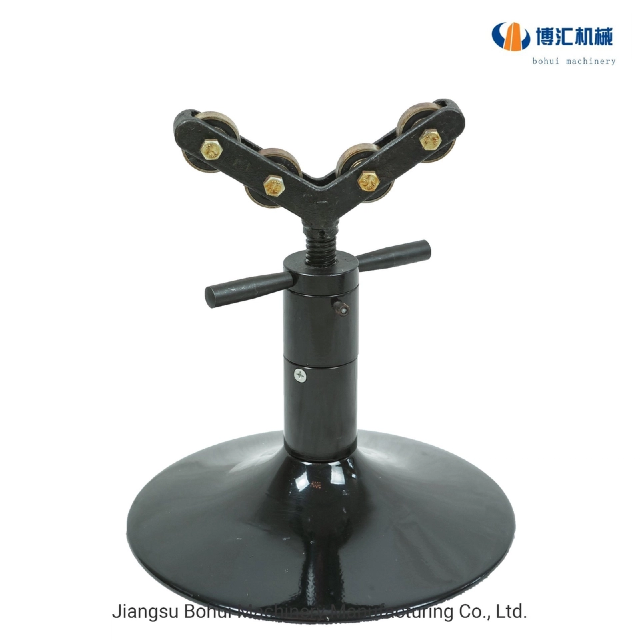
Let’s explore a few examples to see how pipe benders are used in loop bending applications.
In HVAC systems, pipes are often bent into loops to circulate water or refrigerant. A hydraulic bender is used for larger pipes, ensuring that the loops fit perfectly into the confined spaces of air conditioning units. The smooth, consistent bend helps avoid issues with pressure loss and ensures that the system runs efficiently.
Artists often use pipe benders to create decorative loops and coils for sculptures or architectural elements. A CNC bender may be employed to produce intricate, uniform loops with high precision. These loops not only serve an aesthetic purpose but also demonstrate the versatility of pipe benders in creative applications.
In the construction industry, structural pipe frames are often bent into loops for building supports or foundations. A manual pipe bender might be used for small pipes, while larger projects require hydraulic or CNC benders. The ability to create precise loops helps ensure the stability and durability of the structure.
Bend Type | Tool Needed | Ease | Notes |
45° Bend | Manual Bender | Easy | Common for basic bends |
90° Bend | Bench/Hydraulic Bender | Medium | Standard for most bends |
Loop/Coil | CNC/Advanced Bender | Hard | Required for precision |
Creating the perfect loop can be tricky, but with the right techniques and tools, you can achieve outstanding results. Here are some tips to help you improve your loop bending skills:
Before bending, mark several reference points along the pipe to ensure the loop is formed evenly. These marks will help you keep track of the bending process and ensure a smooth, consistent curve.
When forming a loop, it’s important to bend the pipe slowly and incrementally. Gradually apply pressure to the pipe to avoid crimping or wrinkling. This controlled approach ensures the pipe maintains its shape throughout the bending process.
One of the most common issues when loop bending is crimping or wrinkling of the pipe. This occurs when too much force is applied too quickly. To avoid this, ensure you’re using the correct bend radius and that the pipe is properly aligned in the bender.
The answer is yes—pipe benders are more than capable of creating loops, provided you use the right type of tool and technique. While manual benders are suitable for smaller, simpler bends, creating loops with larger pipes requires hydraulic or CNC benders. Jiangsu Bohui’spipe tools are designed to handle various pipe bending tasks, including loop formation, with precision and efficiency. By choosing the right tool and following best practices, you can achieve high-quality results for any project.
Contact us today to learn more about our range of pipe benders and other pipe tools that can help you improve your workflow and get the job done right.
1. Can I use a manual pipe bender to create a loop?
Manual pipe benders are typically not ideal for creating loops, especially in larger pipes. For precise loop formation, hydraulic or CNC benders are recommended.
2. What factors influence the success of loop bending?
The bend radius and the material’s flexibility play a crucial role in loop bending. Larger bend radii and softer materials, like copper, are easier to bend into loops.
3. How do I prevent crimping when bending pipes into loops?
To avoid crimping, apply pressure gradually and choose the correct die for the pipe material and diameter.
4. Are there special tools for creating tight loops?
Yes, CNC pipe benders and specialized dies are often required for creating tight, precise loops, especially for hard materials.