
Views: 0 Author: Site Editor Publish Time: 2026-08-28 Origin: Site


Selecting the wrong vise introduces serious operational risks to any mechanical project. You might face irreversible pipe deformation, severe surface marring, or sudden slippage during high-torque applications. These failures often occur during heavy threading or cutting tasks. Professionals typically choose between two primary categories for securing materials. Chain vises rely on circumferential clamping to wrap entirely around the workpiece. Conversely, traditional yoke or hinged pipe vises utilize V-block top-down clamping to bite securely into the metal. Making the incorrect choice compromises both safety and material integrity on the jobsite.
This article provides a strictly objective, decision-stage framework. It helps fitters, plumbers, and machinists select the right clamping mechanism. We evaluate these options based on material constraints, outer diameters, and jobsite realities. By understanding these variables, you can confidently determine the optimal tool for your specific workflow.
Chain vises distribute pressure evenly around the pipe, making them ideal for larger diameters, irregular shapes, and preventing thin-wall pipe deformation.
Traditional yoke pipe vises offer faster single-handed clamping and superior vertical rigidity, making them the standard for repetitive, small-to-medium diameter metalwork.
Portability heavily influences selection; tripod-mounted variations dictate jobsite efficiency versus fixed benchtop installations.
To evaluate a chain vise vs pipe vise properly, you must understand their underlying mechanics. Each tool applies physical force in vastly different ways. Their distinct designs dictate how well they handle different materials and rotational stresses.
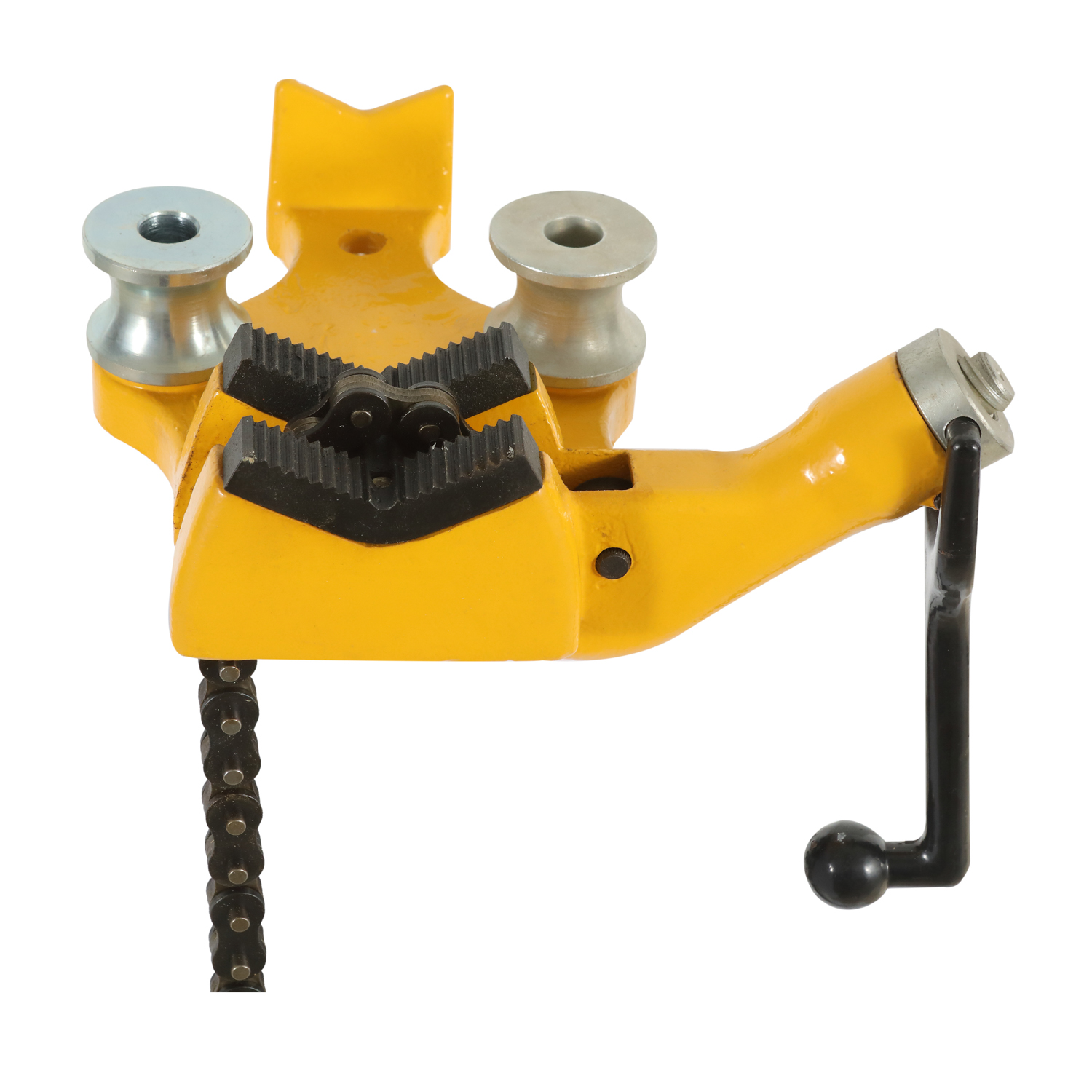
A chain vise secures materials using a flexible, high-tensile steel chain. You drape this chain over the workpiece and lock the links into a receiving slot. Next, you turn a tensioning handle. This action activates a cam or screw mechanism beneath the base. The mechanism pulls the chain downward, tightening it around the material.
This design creates a 360-degree pressure distribution. It wraps the pipe in continuous tension rather than pinching it. The circumferential grip drastically increases the surface contact area. It prevents rotational slip during high-torque applications. Because the pressure spreads evenly, it reduces localized stress points on the material.
Traditional yoke vises rely on rigid, top-down clamping forces. The base features V-shaped lower jaws. You place your material into this V-block groove. Then, you swing the hinged upper yoke over the pipe and lock it in place. You spin a top-mounted clamping screw to drive the upper jaw downward.
This top-down action creates highly concentrated friction points. The hardened steel teeth bite aggressively into the workpiece. This design intentionally digs into rigid metals. It creates an immovable mechanical lock. The vertical rigidity prevents the pipe from spinning or shifting during aggressive cutting and reaming tasks.
Choosing between these tools requires analyzing your specific daily tasks. No single vise performs perfectly across every scenario. You must weigh material properties, diameter requirements, and your workspace environment.
Different materials react poorly to incorrect clamping forces. You must match the vise style to the pipe material.
Galvanized Steel and Black Iron: These rigid metals withstand aggressive clamping. Yoke jaws bite easily into them without compromising structural integrity.
Copper and Thin-Wall Tubing: These materials deform easily. A yoke vise can quickly crush them if you over-tighten the screw. A chain vise spreads the load safely.
PVC and Plastics: Plastics require gentle, uniform pressure. They crack under concentrated top-down force.
Finished or Polished Surfaces: Yoke jaws cause severe surface marring. They leave deep gouges. Chain vises also leave marks, but you can use protective sleeves to shield the metal.
Material Type | Best Vise Option | Marring Risk | Crush Risk |
|---|---|---|---|
Black Iron / Steel | Yoke Vise | High (Acceptable) | Low |
Copper Tubing | Chain Vise | Medium | High |
PVC / Plastics | Chain Vise | Low | High |
Polished Stainless | Chain Vise (Padded) | High | Medium |
Size scalability heavily favors the chain design. Chain vises inherently handle a much wider range of outer diameters. You can secure a six-inch pipe without needing a massive, heavy iron base. The chain simply wraps further around the larger circumference.
Conversely, yoke models have strict diameter limits. Upgrading to a larger capacity requires heavily engineered, bulky equipment. Furthermore, chain models adapt easily to irregular shapes. You can easily secure valves, awkward fittings, and non-cylindrical geometries. A standard V-jaw often fails to grip these irregular items safely.
Your workspace environment dictates your ideal setup. Fixed benchtop models provide unmatched stability in dedicated workshops. However, mobile jobsite solutions require lightweight versatility.
Tripod-mounted variations drastically improve field efficiency. For example, you can compare the footprint and stability of the H404 Tripod Chain Vise against the H401 Tripod Pipe Vise. The chain tripod often packs up lighter and handles larger diameters in the field. The yoke tripod provides a more rigid anvil surface for hammering and repetitive threading of smaller pipes.
The chain design offers distinct advantages for heavy industrial work. However, it also introduces specific operational trade-offs you must consider.
The greatest advantage is exceptional gripping strength for high-torque threading. The wrap-around design resists rotational forces beautifully. Additionally, the head assembly remains surprisingly lightweight relative to its pipe capacity. This makes transportation much easier. The tool also provides incredible versatility for securing irregular fittings and valves.
This design does have drawbacks. It is noticeably slower to secure initially. You must physically wrap the chain, find the right link, latch it, and spin the tensioner. Furthermore, the chains require consistent lubrication to prevent rust and binding. Over years of heavy use, you also face the potential for chain stretch. Stretched links compromise gripping power.
These tools shine in heavy industrial pipefitting. They easily manage large diameter plumbing runs across commercial jobsites. They also serve as excellent mobile threading stations. Utilizing a compact H402 Chain Vise mechanism allows workers to tackle variable field tasks without dragging massive equipment around.
The yoke style remains a staple in pre-fab shops for good reason. It delivers unmatched speed and rigidity for specific tasks.
Speed is the defining benefit. You enjoy rapid, single-handed operation. You simply flip the yoke open, drop the pipe into the V-block, close the latch, and spin the handle. It takes mere seconds. Additionally, the cast-iron frame provides unmatched vertical rigidity. This stability proves invaluable when cutting and reaming standard steel pipe.
The primary disadvantage is a high risk of crushing thin-wall pipes. If you over-tighten the screw on copper or plastics, you will deform the material. They also suffer from limited maximum diameter capacities. Expanding your capacity means buying significantly larger, heavier models.
Yoke models dominate dedicated pre-fab shops. They excel during repetitive cutting and threading of standard black iron or galvanized pipe. They also make perfect additions to garage bench metalworking setups where heavy hammering and rigid filing occur frequently.
Beyond gripping mechanics, you must evaluate how these tools impact daily productivity. Workflow speed and maintenance routines dictate long-term jobsite success.
Every second counts in high-volume production. When comparing time-to-clamp metrics, yoke models win decisively. You can secure a pipe in a yoke vise in under three seconds. A chain vise often requires ten to fifteen seconds for proper wrapping and latching. Over hundreds of cuts, the yoke vise saves considerable labor time.
Both tools require routine maintenance, but their wear parts differ entirely. Yoke models feature hardened steel jaw inserts. These teeth eventually dull from biting into steel pipe. You must unscrew and replace these inserts periodically to maintain grip. Conversely, chain models require you to inspect and replace worn chain links. You must keep the chain clean, oiled, and free of stretched sections.
Choosing the right primary vise streamlines your entire equipment roster. A versatile clamping setup reduces the need for secondary jigs. If you handle diverse tasks, the right vise minimizes reliance on backup Pipe Tools on the jobsite. Consolidating your gear improves transportation efficiency and reduces workspace clutter.
Choosing the correct vise ultimately comes down to your daily materials and required speed. Both tools offer exceptional performance when used in their intended environments.
Default to a yoke pipe vise for high-speed, repetitive work. It dominates when handling rigid, small-to-medium pipes like black iron. Its single-handed operation saves valuable time. Default to a chain vise for large diameters, irregular shapes, and lightweight jobsite portability. It prevents crushing on soft materials and resists massive rotational torque safely.
Before purchasing, audit your most frequent pipe materials. Evaluate your typical outer diameters. Finally, assess whether you need fixed benchtop stability or jobsite mobility. Matching these factors to the right vise ensures safe, efficient, and professional results.
A: Yes, but you must exercise caution. You need to moderate your clamping force carefully to avoid crushing the material. For highly sensitive surfaces or very thin walls, using a specialized strap vise provides a safer alternative to a steel chain.
A: Both work well, but chain vises often perform better on larger diameters. The 360-degree wrap provides superior resistance against rotational torque. Yoke vises work excellently for threading smaller, rigid steel pipes where vertical stability is paramount.
A: It depends heavily on usage volume. In daily industrial applications, you should inspect jaws and chains monthly, replacing them every 12 to 18 months. For occasional DIY or light garage use, these components can easily last a decade without needing replacement.