
Views: 0 Author: Site Editor Publish Time: 2026-07-22 Origin: Site


Choosing the right pipe holding equipment dictates job site efficiency. It also ensures strict safety and fabrication accuracy. Plumbers and pipefitters know this operational reality intimately. The wrong holding unit slows down heavy threading. It ruins expensive copper or steel materials. Today, we frame a critical evaluation for professionals. Both the H402 and H404 models utilize advanced chain-locking mechanisms. They offer superior, wrap-around grip over traditional yoke styles. However, their structural designs serve entirely different deployment strategies. We will strip away the flashy marketing claims right now. Our main objective is to objectively compare the bench-mounted H402 against the freestanding H404. We will evaluate overall footprint, maximum pipe capacity, and implementation environments. You will learn exactly which setup aligns with your daily workflow. You will discover how mounting styles impact heavy-duty pipe threading. Finally, you will see how each tool fits into real-world commercial construction. Let us dive directly into the technical details.
Form Factor Dictates Function: The H402 requires a fixed mounting surface (workbench or truck bed), whereas the H404 is a self-contained tripod unit for off-grid mobility.
Capacity Parity: Both models typically handle equivalent pipe diameters, but structural stability under heavy threading or cutting varies by base setup.
Trade-Specific Value: Prefabrication shops and electrician service trucks lean toward the H402; field plumbers, welders, and commercial construction crews rely on the H404.
Storage & Logistics: The H404 requires floor space and teardown time, while the H402 demands permanent real estate on your work surface.
We start by defining the bench-mounted architecture. The bench model features a low-profile, heavy-duty base plate. Engineers designed it for permanent bolting. You typically mount it to solid shop workbenches. You can also bolt it securely to service truck tailgates. The core advantage is immediately clear to experienced fabricators. It provides maximum rigidity under extreme rotational torque. You experience zero setup time once properly installed. You simply walk up, lock your steel pipe in place, and begin working. Professionals often choose a H402 chain vise for dedicated fabrication environments. It remains a rock-solid, stationary anchor point. It never shifts or wobbles during aggressive pipe cutting.
Next, we define the freestanding tripod architecture. This particular model acts as an all-in-one mobile workstation. It integrates a rugged clamping unit onto folding steel legs. The clever design usually includes built-in tool trays for added convenience. Its core advantage lies in unmatched, off-grid portability. You can deploy it literally anywhere on a sprawling job site. It serves as a completely independent anchor point. Field teams often prefer a H404 tripod vise for dynamic, multi-floor building projects. You carry it inside the facility, unfold the heavy legs, and start fabricating immediately. You do not need a vehicle nearby to begin your work.
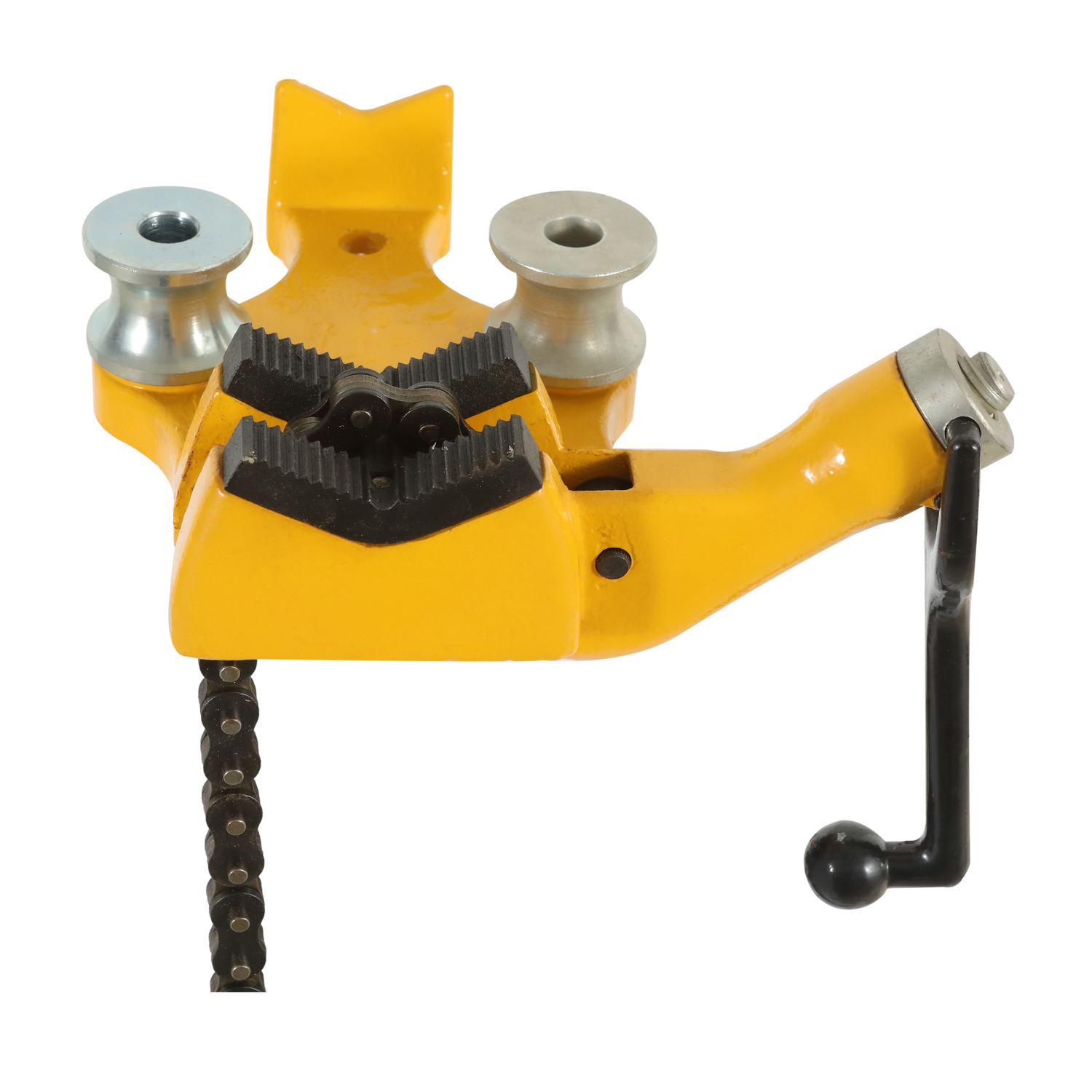
Let us compare minimum and maximum outside diameter holding capabilities. Both models typically grip materials from 1/8" up to 6" or even 8". This capacity parity makes both highly versatile for mixed trades. We must look closely at the physics of the tensioner system. The crank handle leverage provides immense, multiplied clamping force. Jaw teeth engage securely on irregular or dirty materials easily. You get 360-degree contact completely around the pipe perimeter. This evenly distributes pressure and reduces severe crushing on thinner walls. Performing a proper chain vise comparison requires analyzing these exact grip dynamics. A strong, properly tensioned chain prevents rotational slip during high-speed threading. It keeps your material perfectly aligned.
Evaluate the heavy-duty cast iron bases found on both units. They absorb intense vibrations during mechanical threading operations. Hardened steel jaws resist premature wear against rough black iron pipe. However, we must discuss daily wear-and-tear realities. Chains stretch naturally over time under heavy, repetitive torque. Jaw replacement frequency depends entirely on your daily usage volume. Look out for rounded teeth on the primary clamping jaws. Worn jaws cause pipe slipping during critical cuts. Slip ruins the pipe threads and creates dangerous pinch points for your hands.
Best Practice: Always oil the link pins once a month. This simple step drastically reduces metal fatigue and extends component lifespan.
The tripod model usually includes built-in pipe rests. You might find integrated benders for conduit routing. You often see tool hanger slots cut directly into the tray. These features add massive workflow value for busy electricians. They keep sharp reamers, dies, and cutting oil close by. Conversely, the bench model features a stripped-down, utility-first profile. It focuses purely on maximizing raw clamping power. It takes up minimal space on your crowded work table.
Feature Category | Fixed-Mount Model | Freestanding Tripod Model |
|---|---|---|
Mounting Style | Bolted directly to bench or truck | Freestanding folding steel legs |
Standard Pipe Capacity | 1/8" to 6" Outside Diameter | 1/8" to 6" Outside Diameter |
Daily Setup Time | None (always ready) | 2 to 3 minutes per location |
Ancillary Add-ons | Minimal barebones profile | Integrated tool trays, pipe benders |
Best Application | Stationary prefabrication tasks | Remote field installations |
We must discuss the harsh reality of working from a truck. Space remains your most valuable daily asset. The bench-mounted model saves precious cargo space inside the bed. It mounts neatly on the reinforced rear bumper. It pairs perfectly with modern modular tool storage systems. Think about popular interlocking pack-out boxes. Electricians bending conduit daily love this compact setup. Fabricators performing repetitive, localized cuts thrive right here. You never have to unpack heavy folding legs. You simply step out of the cab and start cutting material immediately. It streamlines high-volume workflows.
Common Mistake: Bolting the unit too close to the tailgate edge. Always leave enough clearance to rotate long pipe sections without hitting the truck cab.
Now consider deployment on highly uneven terrain. Plumbers often work in deep, wet mud. Welders face unfinished concrete slabs in progress. A freestanding model adapts beautifully to these harsh conditions. Sometimes your service truck cannot access the immediate work zone. You must physically carry your workstation inside the building. You will also need independent pipe standing tools to support long material runs. Proper construction pipe tools keep your entire site safe. They prevent heavy metal spools from tipping over unexpectedly. A tripod unit serves as the central operational hub. It anchors the cutting operation while jack stands hold the distant ends.
Detailing the bolt-hole patterns is a crucial installation step. You must safely secure the fixed-mount bench model. Backing plate requirements matter greatly for vehicle mounts. A standard aluminum truck bed cannot handle high threading torque alone. You risk tearing right through the thin sheet metal. We highly recommend welding a reinforced steel backing plate first. Use Grade 8 structural bolts for the final installation. This ensures permanent, unyielding rigidity for years of heavy use.
Assess the true physical toll of lugging a tripod model. They often weigh 40 to 50 pounds or more. Carrying it up three flights of stairs drains worker energy rapidly. Next, carefully evaluate the leg-locking mechanisms. Are they prone to jamming in dirty environments? Mud and wet concrete ruin cheap hinge pins quickly. High-quality models use self-cleaning lock washers and oversized latches. Proper daily maintenance prevents frustrating teardown delays. Wipe the steel legs down after every single shift.
How do these clamping units integrate with other job site equipment? You rarely use a holding vise in total isolation. You might use supplementary roller jacks alongside the tripod. This handles long, heavy spools easily during welding. The bench model relies entirely on adjacent shop tables. You must ensure your shop tables match the vise height perfectly. Mismatched heights cause severe pipe bowing. Bowed pipes result in crooked threads and failed pressure tests.
Making the right equipment choice comes down to pure logistics. We developed a simple decision framework to help you decide.
Choose the bench-mounted model if:
Your primary workspace is totally fixed (shop bench or dedicated vehicle bumper).
You need to aggressively minimize equipment weight in your daily carry.
You already have existing roller stands to support longer materials.
Your work requires repetitive threading in one single location.
You prioritize a low-profile setup over mobile flexibility.
Choose the freestanding tripod model if:
You work deep inside commercial buildings, far from your vehicle.
You need an all-in-one workstation with built-in tool trays and pipe benders.
You frequently move between multiple floors on a large construction site.
You encounter uneven terrain like dirt, gravel, or unfinished concrete.
You lack a dedicated workbench to permanently bolt hardware onto.
Instruct your purchasing team on actionable next steps. Measure your available vehicle storage space today. Assess your typical distance-from-truck workflow before ordering any unit. Do your crews walk fifty feet or five hundred feet? Knowing your daily travel path prevents expensive buyer's remorse.
Let us summarize the final equipment verdict. Neither model is objectively superior to the other. The ideal choice hinges entirely on your specific logistical constraints. It depends heavily on your daily deployment environment. Prefab shops desperately need stationary, bolted rigidity. Field plumbers require mobile, go-anywhere adaptability. Investing in high-quality holding equipment drastically reduces material slip. It prevents dangerous pipe wall damage during aggressive cutting. It ultimately increases your daily operational safety. Stop struggling with inadequate gripping tools on site. Direct yourself to view detailed manufacturer spec sheets now. Request a comprehensive commercial quote for your entire fleet. Browse the current inventory for both bench and tripod models. Make the strategic upgrade today to streamline your fabrication process completely.
A: Chain models distribute clamping force evenly around the entire pipe perimeter. This minimizes crushing risk on thin-wall materials. They utilize a flexible steel wrap over the material. Yoke models use a rigid, top-down screw mechanism. Yokes work well for heavy structural steel but can distort softer copper or PVC easily.
A: The bench model's weight capacity depends entirely on its mounting surface. It relies on the structural integrity of your workbench or truck bed. A flimsy table will fail before the tool does. The tripod model is factory-rated for specific, standalone load limits.
A: A typical H401 pipe vise provides a smaller or alternative configuration. It might feature a lighter duty base or smaller maximum capacity. Professionals use it for residential applications. It handles lighter gauge materials perfectly. It acts as an excellent companion to heavier commercial models.
A: No, chains are rarely interchangeable. You must check manufacturer schematics carefully. Chain lengths and pin thicknesses vary heavily by specific model. Maximum pipe capacity dictates the required chain grade. Always order exact OEM replacement chains to guarantee safe locking pressure during threading operations.