
Views: 0 Author: Site Editor Publish Time: 2026-07-01 Origin: Site


Working on maximum-capacity 6-inch pipes introduces intense physical realities to your daily plumbing tasks. You face immense weight and severe safety risks on every site. Handing these massive loads safely requires more than a simple holding tool. You need a reliable mechanism to guarantee safety and precision. Equipment failure under these conditions often results in severe injuries. It can also cause costly material damage during threading or welding preparations.
This guide explores the operational limits of specific clamping equipment. We provide a strict implementation framework for handling max-capacity loads safely. You must understand these limits to protect your crew. You will also learn how to compare various models effectively. This ensures you make the right procurement decision for your daily field operations.
We evaluate exactly how to utilize these stands correctly. You will discover the physics behind securing large pipes. We also share critical maintenance routines to keep your equipment job-ready.
Capacity Reality: While rated for up to 6 inches, securing max-capacity pipes requires specific base-leveling and tray-locking protocols to prevent rotational failure during high-torque threading.
Design Efficiency: The H401 utilizes a chain tensioning system and foldable steel legs with an integrated tray, optimizing the balance between job site portability and structural rigidity.
Model Selection: The H401 tripod vise is optimized for standard field mobility; however, specific heavy-duty or specialized workflows may require evaluating the H404 chain vise or H402 chain vise alternatives.
Risk Mitigation: Proper chain link inspection and jaw teeth maintenance are non-negotiable for maintaining E-E-A-T (compliance and safety) standards on commercial job sites.
Handling 6-inch steel or cast-iron pipes presents a massive physical challenge. Materials at this diameter are incredibly heavy. Their sheer bulk alters the center of gravity dramatically. When you cut or groove them, they generate massive rotational torque. A slight imbalance can quickly destabilize the entire setup. Operators must respect this weight distribution to avoid catastrophic tips. Heavy-duty pipe standing tools are built specifically to counter these extreme rotational forces safely.
What makes a tripod stand viable for large diameters? The answer lies in structural geometry. Proper center of gravity alignment is your first success metric. You must position the pipe centrally over the legs. A wide leg stance provides the necessary footprint. Slip-resistant footing prevents the unit from skating across concrete floors. If any element fails, the entire structure becomes unsafe. Operators must establish these baseline conditions before loading any pipe.
You must understand the difference between static and dynamic loads. Simply supporting a heavy pipe creates a static load. Gravity pulls straight down. However, manual or machine threading applies lateral forces. These forces create dynamic loads. Dynamic loads actively try to twist the stand. The legs must absorb and distribute this twisting energy. Failing to account for dynamic forces is a common mistake on job sites. Standard static supports will buckle under active threading pressure.
The specialized chain routing system offers unique clamping benefits. A tensioning crank distributes the clamping force evenly. It wraps smoothly around a full 6-inch circumference. This even distribution prevents focused pressure points. Therefore, you can secure the pipe firmly. It holds tight without crushing thinner-walled materials. Operators gain maximum grip without compromising the structural integrity of the pipe.
The H401 tripod vise utilizes an incredibly efficient design. The locking tool tray provides a massive mechanical advantage. Pushing the tray down aggressively locks the folding legs outward. This action creates a rigid, unified base. It eliminates leg wobble completely. Furthermore, the portability-to-weight ratio is excellent. Solo contractors can easily fold the unit. They can carry it between floors without needing assistance. This mobility saves valuable time on complex commercial job sites.
Jaw grip performance varies across different pipe materials. The hardened steel jaws bite perfectly into black iron. They also secure galvanized pipes without slipping. However, PVC and softer metals require extra care. The aggressive teeth will score these softer surfaces easily. You should use protective rubber jaw covers. A heavy rag can also act as a protective barrier. Protecting the material prevents costly rework and maintains professional quality standards.
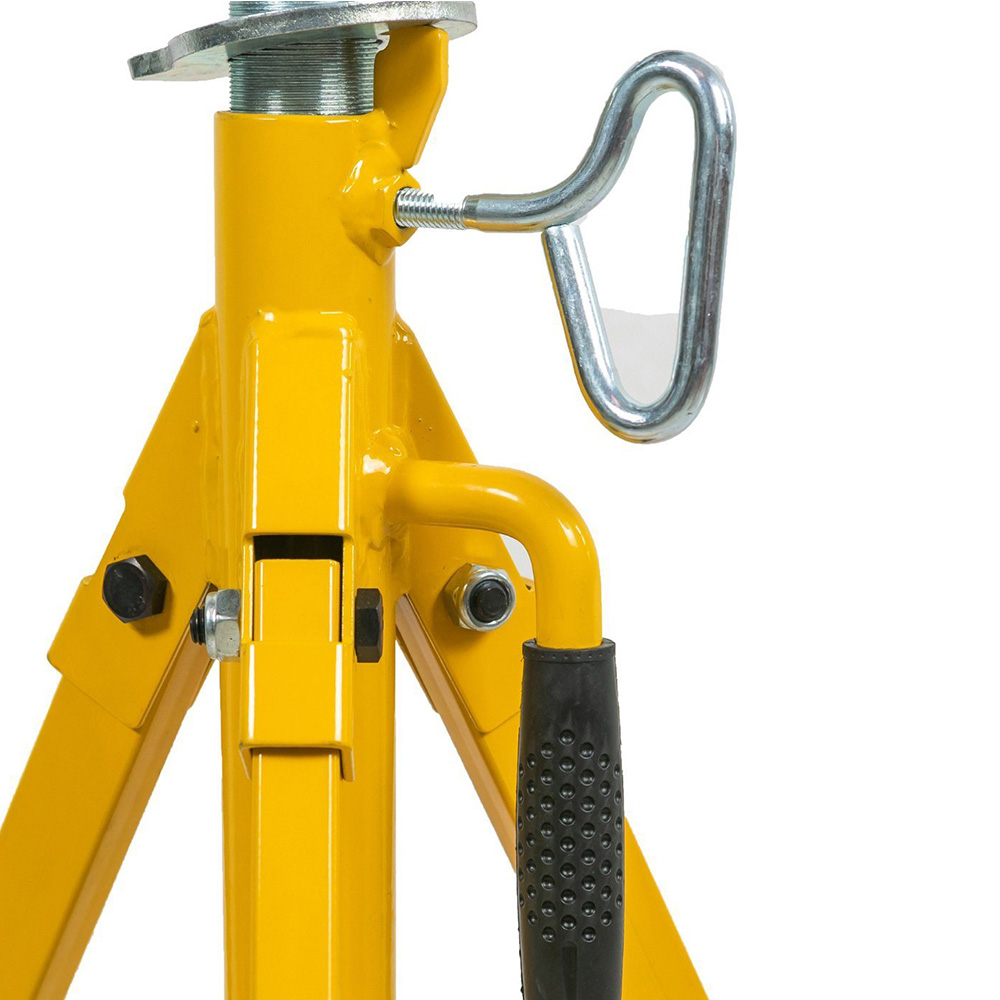
A safe operation begins before you even lift the pipe. Foundation setup is your most critical phase.
Select a completely level ground area.
Clear all debris, cords, and tools from the footprint.
Unfold the legs to their maximum extension.
Push the tool tray down until it fully engages.
Verify the tray is locked to prevent leg collapse.
Never skip the tray-locking step. A heavy load will force unlocked legs to fold inward. This mistake causes immediate and dangerous structural failure.
Lifting a 6-inch pipe requires proper technique. Team lifting is always recommended for max-capacity materials. Rest the pipe gently onto the lower V-jaw. Do not drop it onto the stand. Positioning the overhang correctly is crucial. Keep the overhang as short as possible. This minimizes leverage against the stand. It keeps the center of gravity safely over the tripod base. Poor positioning invites the stand to tip forward during work.
The final phase involves securing the load. Feed the chain over the top of the pipe. Lock the chain links firmly into the quick-grab lower jaw. Begin turning the tensioning handle. You must apply the correct torque here. Identify the exact "bite" point. The pipe should not rotate under hand pressure. Do not over-stress the chain links. Excessive cranking causes metal fatigue over time. A snug, solid bite is safer than an over-tightened death grip.
This model is the ideal choice for general plumbing contractors. It offers a highly portable 1/8-inch to 6-inch capacity. You get a versatile stand for daily field operations. It balances weight, capacity, and rapid deployment perfectly. It handles standard threading and cutting tasks with ease.
Heavy-duty workflows often demand structural upgrades. The H404 chain vise provides significant structural differences. It features a different base plate design. The jaw configuration offers superior torque resistance. We recommend this model for exclusively heavy-wall pipelines. It thrives when operators handle large-diameter pipes all day. It sacrifices some portability for ultimate rigidity.
Not every job involves massive pipes. Evaluate the H402 chain vise for lighter-duty applications. It is perfect for tighter spatial constraints. It also offers different bench-mounting integrations. Smaller crews handling residential pipelines benefit greatly from this model. It is lighter and easier to store in crowded vans.
Choosing the right equipment requires a structured framework. Base your decision on your specific crew size. Consider your primary pipe material. Factor in your transport vehicle limitations. A solo plumber in a small van needs portability. A dedicated industrial crew needs maximum torque resistance. Align the tool capabilities to your most frequent job site demands.
Model Parameter | H401 Vise | H404 Vise | H402 Vise |
|---|---|---|---|
Ideal Application | General Field Operations | Heavy-Wall Industrial | Light-Duty / Confined Space |
Portability Rating | High | Moderate | Very High |
Primary Strength | Versatility | Torque Resistance | Spatial Efficiency |
Proper maintenance ensures ongoing safety. You must maintain your construction pipe tools rigorously. Metal shavings quickly pack into the V-jaw teeth. This debris creates a smooth surface. A smooth surface causes immediate pipe slippage. Use a stiff wire brush to clean the jaws daily. Remove all debris safely. Sharp teeth guarantee a secure bite on every single job.
Chain failure under a 6-inch load is catastrophic. You must inspect the chain links regularly. Look closely for signs of metal fatigue. Check for stretched links or worn pins. Any deformation means the chain is compromised. Replace a damaged chain before you use the stand again. Visual inspections take seconds but prevent major site accidents.
Construction environments are notoriously damp and dusty. This environment accelerates rust and joint stiffness. We recommend a strict lubrication schedule.
Oil the tensioning screw weekly.
Apply penetrating oil to all leg hinges.
Wipe away excess oil to prevent dirt buildup.
Proper lubrication maintains rapid deployment capabilities. It ensures the folding legs operate smoothly without binding.
Safely securing a 6-inch pipe is entirely feasible. You can achieve this using the correct techniques. You must strictly adhere to base-leveling protocols. Following tensioning procedures guarantees site safety. Never rush the foundation setup phase.
Evaluating the specific demands of your job site is critical. Dynamic threading creates different forces than static welding. These demands should dictate your final equipment choice. You must choose between the H401, H402, and H404 based on factual field data.
Review the full technical specifications before buying. Compare the capacities against your most common materials. Contact a sales engineer to match the exact vise to your specific project requirements today.
A: Yes, but you must take extra precautions. Power threaders generate extreme rotational torque. You must tie down the front leg securely. Alternatively, use ceiling braces to counteract the twisting forces. Failing to brace the stand will cause it to tip during power threading operations.
A: Standard steel teeth will score soft metals or plastics easily. We highly recommend using specialized rubber jaw covers. If covers are unavailable, wrap the pipe in a thick protective barrier. Heavy cloth or rubber scraps work well to prevent surface damage.
A: Pipe diameter capacity differs from structural weight limits. The stand handles 6-inch diameter pipes effectively. However, you must always reference the manufacturer safety guidelines for exact weight limits. Never exceed the stated structural weight, regardless of the pipe's outer diameter.