
Views: 0 Author: Site Editor Publish Time: 2026-08-22 Origin: Site


Fabrication shop managers, welding contractors, and piping engineers constantly face the challenge of securing heavy materials during complex projects. Following a detailed pipe stand selection guide proves essential for making informed procurement decisions. Every project requires uncompromised stability. Selecting the wrong pipe support severely limits operational efficiency. It easily compromises weld quality. Furthermore, inadequate supports introduce severe site safety liabilities. Relying on improper equipment consistently leads to project delays, rework, and potential workplace injuries.
This comprehensive resource provides a technical, vendor-neutral framework for evaluating your options. You will learn how to match specific stands to your exact application needs. We explore how to properly evaluate static and dynamic load capacities, head types, and critical safety compliance. Ultimately, this framework helps you shortlist, evaluate, and purchase the exact right tools to optimize your specific fabrication environment.
Load constraints dictate design: Differentiate clearly between static load capacities (holding) and dynamic load capacities (turning/rolling) before purchase.
Application drives head selection: V-heads suit stationary fitting, while roller pipe stands are mandatory for continuous TIG/MIG pipe welding.
Adjustability matters for scalability: Investing in highly adjustable pipe stands prevents the need for disparate, single-use equipment across variable pipe schedules.
Compliance is non-negotiable: Selected models must align with regional safety standards (OSHA/ASME) for load-bearing and stability.
Outdated or makeshift supports create severe operational bottlenecks across your shop floor. Welders waste countless hours manually repositioning heavy spools. Poorly matched equipment requires excessive handling time. This slows down entire production lines. Inconsistent support causes uneven welds. You inevitably face increased labor costs when workers spend more time fighting their equipment than welding.
Safety and liability represent massive concerns for any fabrication manager. Tip-overs remain a realistic and dangerous risk. Load failures occur when personnel overload underrated stands. The hidden costs of equipment damage add up quickly. More importantly, worker injuries result in devastating personal consequences and massive insurance liabilities. You must prioritize stable, engineered supports to protect your workforce.
Precision relies entirely on stability. We see a direct correlation between secure pipe support and maintaining tight tolerances. Automated fabrication systems require absolute rigidity. Manual fit-ups demand identical consistency. Upgrading your Manufacturing Pipe Tools eliminates alignment errors. Secure stands keep pipes perfectly level during complex threading or grooving operations. This investment directly improves your final product quality.
You must pair the right stand design to your specific fabrication task. Using a universal approach often leads to damaged materials or unsafe working conditions. We can break down modern Pipe Standing Tools into distinct functional categories.
These units feature a simple, V-shaped resting saddle. They excel at stationary holding and layout work. Heavy-duty fit-ups require the rigid stability they provide. However, they carry strict limitations. V-heads perform poorly during rotational welding. Turning heavy carbon steel inside a fixed V-head creates massive friction. This often gouges the pipe surface and damages the stand.
Fabrication tasks requiring continuous rotation demand specialized equipment. A Roller Pipe Stand allows smooth, uninterrupted turning during welding, threading, or roll grooving. Roller material choices matter greatly:
Steel Rollers: Best suited for heavy, rough carbon steel pipes. They withstand extreme abuse.
Polyurethane/Rubber-Coated Rollers: Mandatory for stainless steel, exotic alloys, or coated pipes. They prevent carbon cross-contamination. They also protect fragile outer coatings from gouging.
Some operations require multi-directional movement. Ball transfer heads feature omni-directional steel bearings. They perfectly suit situations requiring longitudinal and rotational movement simultaneously. We frequently use them when feeding long pipe sections into bandsaws or automated threaders.
Your operating environment dictates the ideal base design. Field contractors heavily prefer folding legs. They offer excellent portability and easy truck storage. Conversely, permanent manufacturing shops should utilize heavy-duty fixed bases. Fixed models generally provide higher weight capacities and superior rigidity.
Head Type | Primary Application | Rotational Ability | Material Protection |
|---|---|---|---|
Fixed V-Head | Tacking, Fit-up, Storage | Poor | Low (Prone to scratching) |
Steel Roller | Continuous Welding (Carbon) | Excellent | Moderate |
Polyurethane Roller | Welding (Stainless/Alloys) | Excellent | High (Prevents contamination) |
Ball Transfer | Feeding Saws / Threaders | Good (Multi-directional) | Low to Moderate |
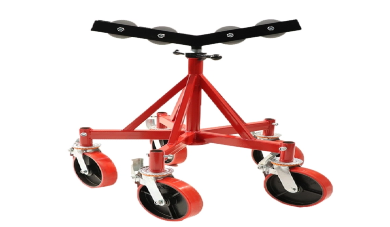
Evaluating specifications goes beyond looking at price tags. You must scrutinize engineering dimensions to ensure workplace safety. Proper procurement requires a deep understanding of load ratings, physical dimensions, and mechanical safeguards.
Manufacturers often list impressive static weight limits. However, static capacity only measures dead weight resting on the stand. You must evaluate dynamic load limits if operators will turn the pipe. Rotational friction drastically reduces safe working loads. Always calculate your required capacity using a strict safety factor. Industry best practices recommend applying at least a 2:1 safety margin. Never operate any stand at its absolute maximum limit.
Assess the minimum and maximum outside diameter (OD) the stand can securely cradle. A stand designed for 24-inch mains will fail to secure a 2-inch pipe safely. Small pipes often slip through wide roller gaps, creating severe pinch-point risks. Ensure your chosen model specifies an OD range matching your daily production schedule.
Height adjustment systems prevent back strain and improve weld access. An Adjustable Pipe Stand typically utilizes one of three locking mechanisms. Friction collars offer basic hold but can slip under vibration. Acme-thread lead screws provide precise, fine-tuned height adjustments. Pin-locks deliver the highest safety level. A steel pin passing entirely through the center column offers a verifiable, visual fail-safe against sudden drops.
Base geometry determines overall stability. We generally divide these into two categories: tripods and four-point bases. Consider your floor conditions carefully.
Feature | Tripod Base (3-Point) | Square Base (4-Point) |
|---|---|---|
Terrain Suitability | Uneven dirt, gravel, field sites | Flat concrete, permanent shop floors |
Self-Leveling | Yes, inherently finds balance | No, requires level ground to avoid rocking |
Load Distribution | Concentrated on three points | Evenly spread, superior max-load stability |
Portability | Often folding, highly portable | Usually fixed, bulky and heavy |
General-purpose stands often fail in extreme industrial environments. Welding operations and heavy fabrication introduce unique stresses. You must evaluate these specialized requirements to protect your investment and your team.
Continuous welding generates immense heat and electrical current. Grounding considerations remain critical. Ensure the stand does not disrupt your welding circuit. Poorly grounded setups cause arc strikes on the stand body. This ruins the bearings and compromises structural integrity. Furthermore, evaluate the heat resistance of the bearing lubricants. High-temperature TIG/MIG environments easily melt standard greases. This causes rollers to seize mid-weld, resulting in expensive rework.
Safety compliance requires proactive verification. Look for certified load test ratings from independent engineering firms. Ensure your selected equipment complies with site-specific ASME codes and local OSHA regulations. Many jobsites prohibit uncertified, shop-built stands entirely.
You should also implement basic risk mitigation strategies. Address common user complaints proactively. Inspect equipment regularly for bearing wear. Watch for wobbly lead-screws caused by damaged Acme threads. Discard any stand showing base deformation under heavy loads. Deformed legs indicate severe metal fatigue and imminent failure.
Navigating dozens of equipment catalogs feels overwhelming. You need a structured approach to narrow down your options. Follow this logical progression to select the best equipment for your specific operations.
Step 1: Audit your most common pipe schedules. Let your 80% use-case dictate the primary stand type. If 80% of your work involves 6-inch stainless steel, prioritize polyurethane roller stands. Do not overspend on massive 36-inch capacity models for rare, isolated jobs.
Step 2: Define the operating environment. Field contractors need rugged, portable tripods that handle mud and gravel. Shop managers should invest in fixed, multi-directional, heavy-duty bases for clean concrete floors.
Step 3: Evaluate long-term maintenance and value. Look significantly beyond the initial unit price. Assess the availability of replacement parts. Heavy use destroys roller heads, bearings, and lock-washers over time. Ensure your vendor sells replacement heads so you avoid buying entirely new stands. Review the warranty terms thoroughly.
Step 4: Request demos and specifications. Ask vendors for specific engineering datasheets before placing bulk orders. Request dynamic load testing certificates. Conduct a physical demo to test the locking mechanism tolerances firsthand.
Selecting reliable pipe supports requires a systematic approach. Start your decision-making funnel by defining your maximum weight and size requirements. Next, choose the appropriate head type based on your primary operation, whether tacking or continuous rolling. Then, select a base geometry matching your physical location. Finally, validate all engineering and safety compliance certifications.
We strongly encourage the proactive replacement of aging, non-compliant stands. Old equipment puts your personnel in extreme danger. It also threatens your profit margins through ruined materials and wasted labor hours.
Take action today to secure your shop floor. Review your current equipment inventory against these standards. Reach out to a qualified sales engineer to request a custom quote, verify specific sizing requirements, or explore a comprehensive product catalog tailored to your fabrication needs.
A: Stands provide temporary, floor-based support during fabrication, fitting, and welding processes. They hold loose pipe sections on the ground. Hangers provide permanent, overhead structural support. Engineers design hangers to suspend active, operational piping systems from ceilings or structural beams.
A: You should only use V-heads for tacking or stationary fit-ups. For continuous welding, a roller pipe stand is strictly required. Rollers ensure smooth, uninterrupted rotation. This maintains weld integrity and prevents gouging the pipe exterior against fixed metal saddles.
A: Mandate the use of polyurethane, nylon, or rubber-coated rollers. You can also use specialized stainless-steel sleeve covers. These materials physically separate the carbon steel stand from the stainless pipe. This prevents carbon cross-contamination, which leads to rust and galvanic corrosion.
A: The industry typically requires at least a 2:1 safety margin. For critical lifts, engineers may specify higher ratios. You should never operate a stand exactly at its absolute maximum capacity. Always leave a significant weight buffer to account for dynamic forces and uneven terrain.