
Views: 0 Author: Site Editor Publish Time: 2025-11-24 Origin: Site


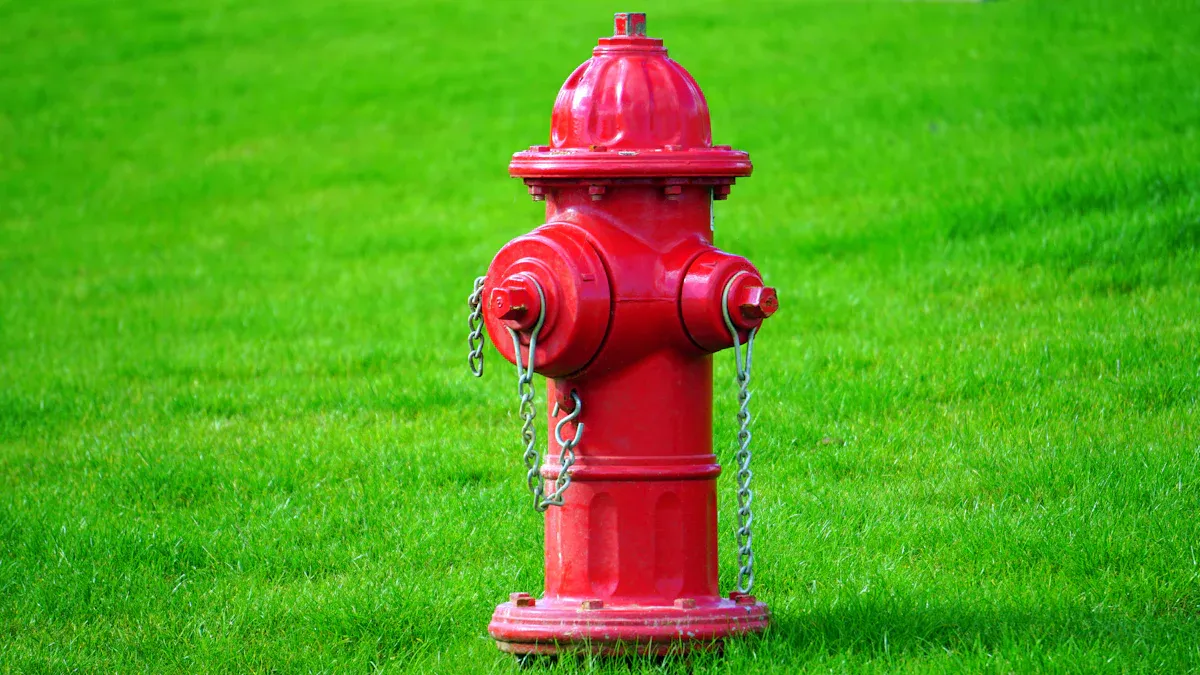
You need water inside buildings if there is a fire. The purpose of a standpipe is to function like a hydrant indoors, allowing firefighters to access water easily. Standpipes help reach every floor quickly, making the process of fighting fires safer and faster. When you install a standpipe, you must follow safety rules. Standpipes often work in conjunction with other fire tools, contributing to the overall safety of your building.
Standpipes let firefighters get water fast inside buildings. This helps them fight fires quicker and safer.
Putting in a standpipe system helps follow fire safety rules. It also helps keep people and buildings safe during emergencies.
Checking and fixing standpipes often is very important. This makes sure they work right when needed.
Wet standpipes always have water ready to use. Dry standpipes are empty until firefighters get there. This makes them good for different places.
Using standpipes with sprinkler systems makes fire safety better. It gives a steady water supply and helps control water pressure.
You need a good water system in your building for fires. A standpipe helps firefighters get water fast on every floor. When a fire starts, every second counts. If you only use outside hydrants, firefighters must pull long hoses inside. This takes more time and makes fighting the fire harder.
Standpipes fix this problem. You find them in tall buildings, schools, and big offices. Firefighters hook their hoses to the standpipe, which is part of the building’s water pipes. This means water is right where it is needed. Having a working standpipe helps save lives and property.
The fire at One Meridian Plaza was a big event in American fire history. It is one of the most important high-rise fire case studies. People will learn from it for many years. The fire happened in the 38-story Meridian Bank Building in Philadelphia. It started on the 22nd floor at about 8:40 p.m. and burned for 19 hours. The fire destroyed eight floors and needed over 300 firefighters. Three firefighters died fighting this huge fire.
This sad story shows why standpipes are so important. With a standpipe, firefighters can reach the fire faster and stop it from spreading.
You should also think about the environment. Sometimes, water from a standpipe can carry chemicals from firefighting foam. You need to handle the water carefully to protect streams and soil. Some rules say you must treat the water before letting it go outside.
A standpipe works like a hydrant inside the building. You do not need to run hoses from outside. There are hose connections on every floor. This makes fighting fires quicker and safer.
Here are some reasons why a standpipe is important for your building:
Firefighters need a steady water supply to fight fires inside.
Standpipes let firefighters connect hoses and get water fast.
Wet standpipes always have water ready for use.
Standpipes give water close to the fire, so firefighters do not need long hoses.
This matters in tall buildings, where carrying hoses up stairs takes too long.
Fire departments use standpipes to get water quickly in emergencies.
Standpipes help firefighters spend less time moving hoses, which is important when lives are in danger.
These systems help with both inside and outside firefighting.
When you put in a standpipe, you make your building safer. You help firefighters work faster. You also help your building follow fire codes and insurance rules. The purpose of a standpipe is to keep people, property, and the environment safe by giving a good water system for fires.
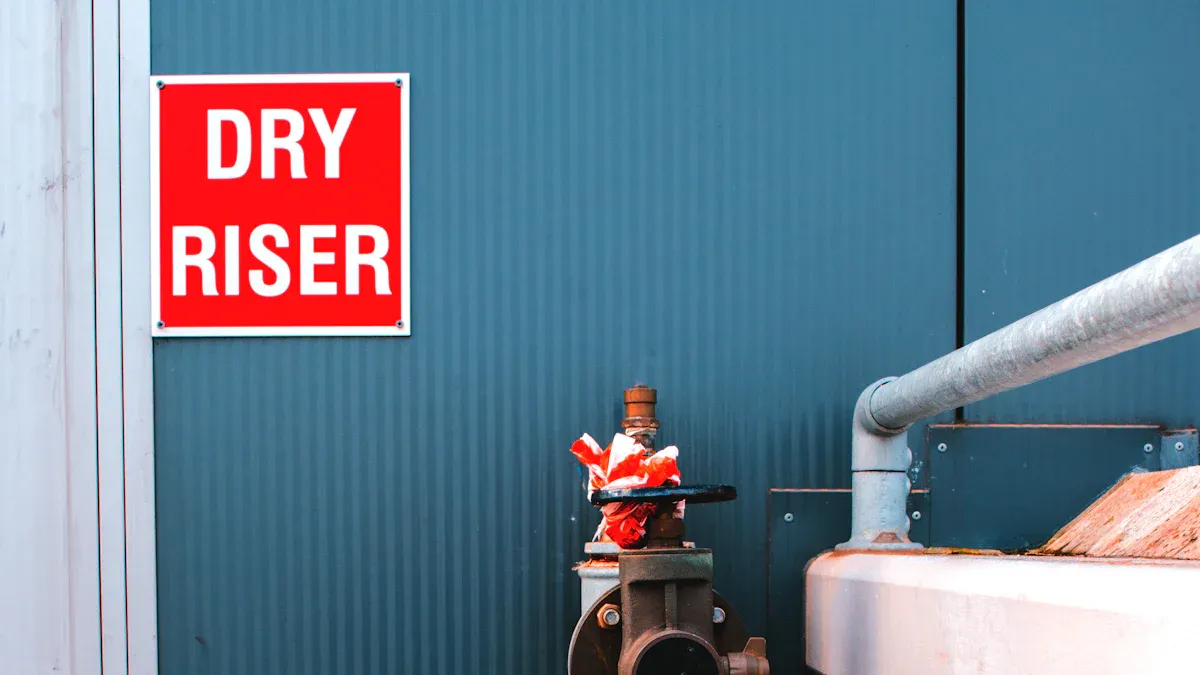
A standpipe system helps fight fires inside buildings. You see these systems in schools, offices, and tall apartments. The standpipe connects water pipes on every floor. Firefighters can get water fast wherever they need it.
It is important to know the parts of a standpipe system. The main parts work together to send water where it is needed. Here are the usual parts you will find:
Pipes connect through the whole building.
Pumps push water to higher floors.
Valves let you control the water flow.
Alarms warn you when the system is used.
Drains help with testing and fixing the system.
Fire department connections let firefighters attach hoses.
Gauges show water pressure during tests.
A standpipe system has a water flow alarm device. This alarm sits between the water supply and the first hose spot. When someone uses the system, the alarm goes off. You also need a main drain for testing and keeping the system working well.
If you want to put in a standpipe system in a business building, you should plan to spend $5,000 to $15,000 or more. The cost depends on your building’s size, how many standpipes you need, and how hard it is to install.
You might wonder about wet and dry standpipe systems. Here is a simple table to help you:
Type of Standpipe | Description | Ideal Use Case |
|---|---|---|
Wet Standpipe | Always has pressurized water, ready to use when a valve opens. | Buildings where freezing is not a problem and quick action is needed. |
Dry Standpipe | Stays empty until water is added; filled with air or nitrogen until needed. | Places where freezing can happen, so water is added only when firefighters arrive. |
Many new buildings use a standpipe system with sprinklers. You get better fire safety when both work together. Here is how they combine:
Shared Water Supply: Both systems use the same water source. Careful planning makes sure there is enough water and pressure.
Zoned by Floor: Each floor has its own pipes for both systems. This helps with fixing and keeps water pressure steady.
Pump Coordination: Fire pumps work for both systems at the same time. You get strong water flow in emergencies.
Control and Monitoring: Control panels watch both systems. You stay safe and follow fire rules.
When you use a standpipe system with sprinklers, your building is safer. Firefighters can work faster and protect everyone inside.
Standpipe systems are found in many buildings. You see them in tall apartments, big offices, and schools. If your building has four stories or more, you need a standpipe. You also need one if the top floor is over 30 feet high. If the lowest floor is more than 30 feet below where firefighters can reach, you need a standpipe. Large places like theaters or stadiums need a standpipe if more than 1,000 people can fit inside. Stages bigger than 1,000 square feet must have a standpipe system.
Here is a table that shows when you need a standpipe:
Condition | Description |
|---|---|
Height | Buildings with four or more stories, or floors over 30 feet above/below access, must have a Class III standpipe system. |
Group A | Nonsprinklered assembly buildings with more than 1,000 people need a Class I automatic wet standpipe. |
Stages | Stages larger than 1,000 square feet require a Class III wet standpipe system. |
Standpipes are also used in bridges and tunnels. These places need water for emergencies.
You must follow rules when you put in a standpipe. The National Fire Protection Association and International Building Code make these rules. NFPA 14 tells you where to put hose spots and how to keep pipes safe from fire. NFPA 25 explains how to check and fix the system. You need to look at hose spots and valves every year. Sometimes you check them every few months.
Here is a table with important standards:
Standard | Description |
|---|---|
NFPA 14 | Sets rules for hose connections, pipe protection, and standpipe types. |
NFPA 25 | Lists inspection and maintenance steps for hose connections and valves. |
IBC | Requires fire resistance for risers and laterals not in exit stairways. |
You must also follow water pressure rules. NFPA 14 raised the lowest pressure from 65 psi to 100 psi in 1999. This helps firefighters get enough water on every floor. If your building has sprinklers, every spot within 200 feet of a standpipe must be covered. If there are no sprinklers, the distance is 130 feet.
Tip: Always check local rules before you put in a standpipe. Rules can be different in each city or state.
A good water system and a working standpipe help keep your building safe and make sure you follow the law.
There are three main classes of standpipe systems in buildings. Each class is made for different people and uses different hose sizes. It is important to know which class your building needs.
Here is a table that shows the differences:
Class | Hose Connection Size | Intended Users |
|---|---|---|
Class I | 2-1/2″ (64 mm) | Fire departments and trained professionals |
Class II | 1-1/2″ (38 mm) | Trained building occupants |
Class III | 1-1/2″ (38 mm) and 2-1/2″ (64 mm) | Fire departments and trained building occupants |
Class I standpipe systems let firefighters use big hoses for strong water flow. Class II systems let trained people in the building use smaller hoses for quick help before firefighters come. Class III systems have both hose sizes, so both groups can use them.
Tip: Check your building’s fire safety plan to see which class of standpipe system you need.
Standpipe systems can also be grouped by how they get water. Some work by themselves, and others need help from firefighters.
Here is a table to help you understand the differences:
Type of Standpipe System | Water Supply Description | Activation Mechanism |
|---|---|---|
Manual Dry Standpipe System | Not connected to a water supply; fire department pumps water in through a connection. | Firefighters must supply water. |
Automatic Dry Standpipe System | Connected to a water supply; kept under air pressure until needed. | Water flows when you open a hose valve. |
Manual Wet Standpipe System | Contains water but needs extra water pumped in by the fire department. | Firefighters add more water during a fire. |
Automatic Wet Standpipe System | Always connected to a water supply; ready to use when you open a valve. | Water flows right away when you open a hose valve. |
Automatic standpipe systems give water as soon as you open the valve. You do not have to wait for firefighters to connect hoses outside. Manual standpipe systems need firefighters to bring water before you can use them. You should know which type your building has, so you can act fast in an emergency.
Note: Automatic standpipe systems save time during a fire. You get water right away, which helps protect lives and property.
Always learn about the standpipe systems in your building. Knowing the class and type helps you stay safe and follow fire codes.
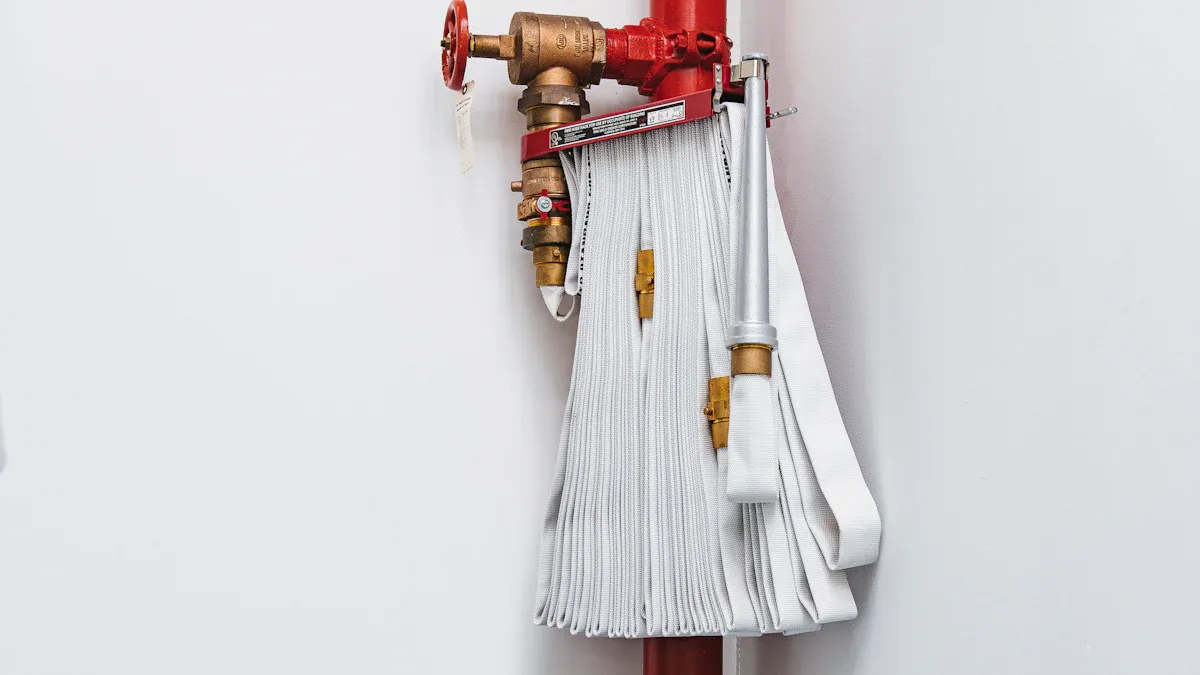
You need to check your standpipe system often to make sure it works. Inspections help you find problems before they get worse. You should look at pipes, valves, and hose connections for leaks or damage. NFPA 25 tells you when to do these checks. You must test the system with water to see if it can handle fire pressure.
Here is a table that shows common problems found during inspections and how they affect the system:
Common Issue | Impact on System Reliability |
|---|---|
Hydrostatic Testing Non-Compliance | Leaks may go unnoticed, so the system could fail in an emergency. |
Corrosion and Rust | Leaks or blockages can happen, making water flow weaker and the system less safe. |
Obstructions | Blockages inside the pipes stop water from moving, so the system does not work well in a fire. |
Component Wear and Tear | Broken parts can make the system fail, putting people and property in danger. |
Neglecting Inspections | Skipping checks can mean big repair bills, legal trouble, or fines for not following NFPA rules. |
Regular checks help keep people and buildings safe. You also save money and keep your insurance. If you skip checks, you might get fined or have legal trouble.
You must keep your standpipe system working well so it is ready for a fire. Maintenance means cleaning, fixing broken parts, and clearing blockages. When you take care of your system, firefighters can work faster and keep everyone safe.
New technology has made standpipe systems better. Here is a table with some new features:
Improvement Type | Description |
|---|---|
Safety Enhancement | Air standpipes give firefighters a steady air supply, so they do not run out of air while working. |
Increased Efficiency | The air refill process is faster, so firefighters can focus on rescue and putting out fires. |
Improved Response Times | Not having to carry air bottles by hand means firefighters can respond faster and do their jobs better. |
Tip: Plan to check and fix your system every year. Write down all tests and repairs. This helps you stay ready for emergencies and follow fire safety rules.
A standpipe system that is cared for makes you feel safe. You know your building is safer, and you protect what you own.
Firefighters need a standpipe to get water fast. It helps them use fire hoses inside your building. This system keeps people safe and follows fire safety rules. You must put it in the right way. You also need to check it often to make sure it works. If you do not take care of it, you could get fined. Your business might have problems. You could be blamed if something goes wrong. You might even get in trouble with the law.
Inspection Type | Frequency | Details |
|---|---|---|
Hydrostatic tests | Every 5 years | Test with strong water pressure to find leaks. |
Flow test | Every 5 years | Make sure water reaches the farthest hose spot. |
Tip: Have fire safety experts check your standpipe every five years. Write down what they find and use a checklist. This helps you get ready for emergencies.
A wet standpipe always has water ready for use. A dry standpipe stays empty until firefighters add water. You use wet systems in heated buildings. Dry systems work best where pipes might freeze.
You should inspect your standpipe system every year. You need to test water flow and pressure every five years. Regular checks help you find problems early.
Firefighters use Class I and Class III standpipe hoses. Trained building staff can use Class II hoses. You should never use a standpipe hose unless you have proper training.
Tip: Ask your local fire department for training on standpipe use.
If you skip maintenance, your system may fail during a fire. You could face fines or lose insurance coverage. You also risk the safety of people in your building.
Problem Found | Possible Result |
|---|---|
Leaks | Water loss, system failure |
Rust or corrosion | Blocked pipes, weak flow |
Broken valves | No water at hose spot |