
Views: 0 Author: Site Editor Publish Time: 2026-07-15 Origin: Site


Weld quality is dictated long before you ever strike an arc. Poor fit-ups and inadequate support inevitably lead to failed non-destructive testing (NDT). They cause costly rework and introduce severe safety hazards. Heavy-diameter pipes amplify these risks significantly on the shop floor.
Moving away from makeshift supports transforms your entire operation. A standardized, engineered pipe welding setup bridges a massive operational gap. You evolve from inconsistent manual fabrication to repeatable, code-compliant production. Welders stop fighting gravity and focus entirely on deposition.
This guide outlines the essential components and evaluation criteria you need. We explore strict safety standards for architecting a professional fabrication station. You will learn exactly how to build a reliable pipe support ecosystem. We cover everything from alignment tools to heavy-duty rotation equipment.
A fully integrated setup reduces fit-up time by up to 50% while mitigating handling risks for heavy-wall pipes.
Selecting the right pipe welding aligner depends heavily on wall thickness, pipe schedule, and hydraulic vs. manual force requirements.
Load ratings and roller materials (e.g., steel vs. polyurethane) on your welding roller stand directly impact both worker safety and the prevention of cross-contamination in exotic metals.
Compliance with standard codes (ASME, API) requires minimizing induced stress during the tacking phase, achievable only through proper multi-point support.
Inadequate joint preparation carries steep hidden costs. Fabricators often underestimate the labor hours lost daily. Workers waste valuable time hammering wedges or adjusting makeshift shims. High reject rates frequently stem directly from Hi-Lo alignment issues. Hi-Lo refers to the internal mismatch between two pipe edges. Even minor misalignments force welders to perform excessive grinding or dangerous gap bridging.
Ergonomic injuries represent another massive hidden expense. Welders repeatedly strain their backs attempting to manually rotate heavy spools. They risk pinched fingers when using unrated pry bars. Upgrading your equipment eliminates these hazards. A professional pipe welding setup fundamentally changes your baseline production metrics.
You measure a successful setup through several strict criteria. Fit-up speed must increase. Rotational stability during welding must remain absolute. Operator safety must improve demonstrably. Finally, the equipment must cause zero damage to the exterior pipe surface.
We must maintain an evidence-oriented reality check here. Avoid believing claims of perfect welds every single time. Equipment cannot replace human expertise. Instead, view the setup as a mechanical baseline. A proper support system removes mechanical variables from the equation. It allows the welder's technical skill to dictate final quality. You stop fighting misalignment. You stop fighting gravity. You simply weld.
Common Mistake: Relying on overhead cranes to hold pipes during the root pass. Cranes inevitably drift. They introduce micro-movements into the joint. This movement causes tack welds to crack prematurely.
Every professional fabrication station requires a foundational anchor. Your primary table dictates the stability of smaller assemblies and pipe fittings. A dedicated industrial workbench provides the necessary structural rigidity. Flimsy tables warp under intense localized welding heat. Professional benches resist thermal distortion entirely.
These benches must feature heavy-duty grating or platen surfaces. Platen surfaces allow for precise jigging and rapid clamping. They also provide reliable grounding points. Proper grounding prevents arc blow. Arc blow disrupts the weld puddle and creates porosity. You secure your fittings securely into clamping slots before tacking. This prevents distortion during the cooling phase.
Securing the root gap requires specialized intervention. You cannot rely on eyesight and brute force. A precision pipe welding aligner tackles Hi-Lo directly. These tools force opposing pipe edges into concentric alignment. They maintain a uniform root gap around the entire circumference.
You must understand the distinction between internal and external alignment clamps. External clamps wrap around the outside diameter. They are fast and highly effective for standard spools. Internal clamps expand inside the pipe. They leave the entire exterior joint fully exposed. This allows welders to complete the root pass without removing the clamp.
Heavy pipe spools require dedicated weight-bearing infrastructure. A proper roller pipe stand safely bears the immense dead weight of the spool. It eliminates the need for suspended crane loads. These stands feature precision bearings built into the heads.
They allow smooth, continuous rotation during the process. This capability proves vital for out-of-position welding. Welders can remain in a comfortable, flat position. They simply roll the pipe manually as they progress. Consistent rotation prevents stop-start defects in the weld bead. It also facilitates semi-automated or mechanized welding applications later.
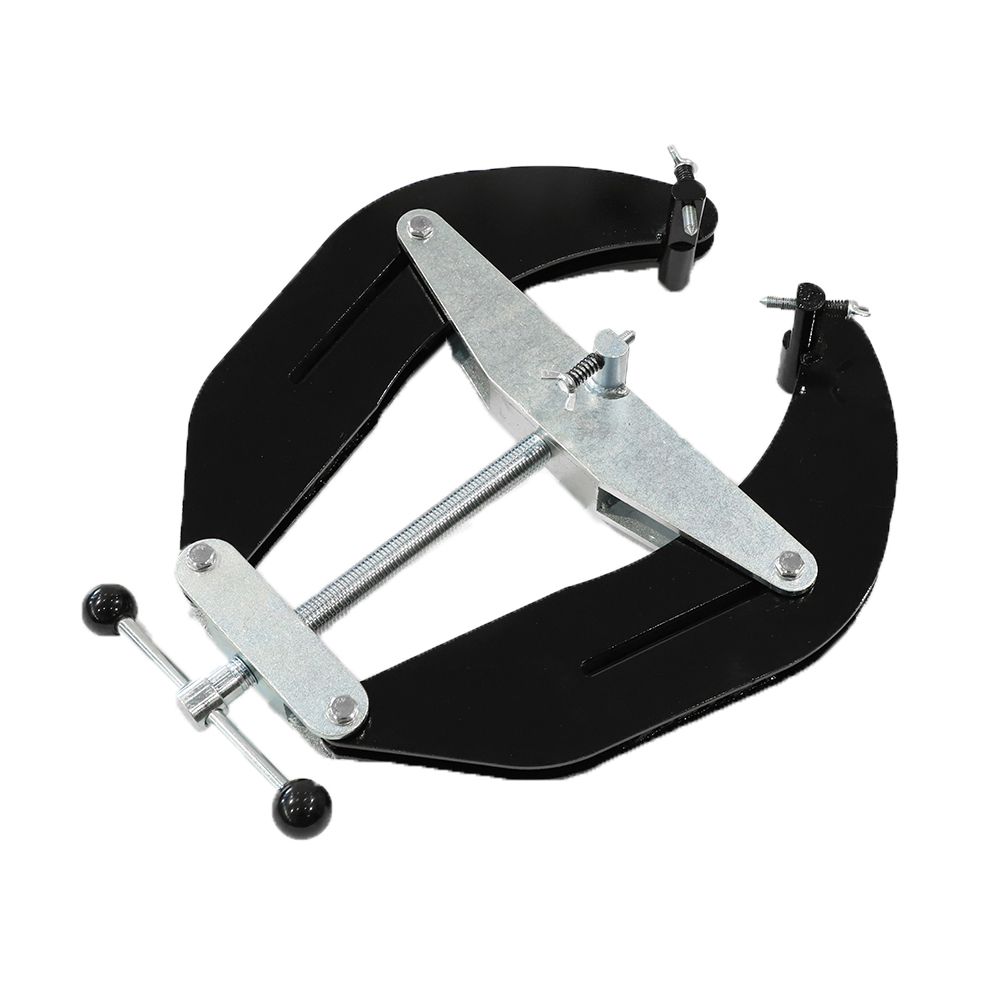
Selecting the right alignment tool requires understanding your specific fabrication parameters. No single clamp covers every possible pipe schedule. You must evaluate your solutions based on precision and daily practicality.
Manual chain and cage clamps represent the first solution category. These tools excel in specific environments. They work best for thin-wall pipe and standard schedules. Field repair teams favor them for their portability. They require lower upfront investment. However, they rely entirely on the operator's physical strength to reform the metal.
Hydraulic internal and external clamps form the second category. You must use hydraulic clamps for heavy-diameter, high-schedule pipes. Manual force simply cannot overcome out-of-roundness in thick steel walls. Hydraulic cylinders apply immense, uniform pressure. They force stubborn pipes back into a perfect circle.
Feature | Manual Chain/Cage Clamps | Hydraulic Alignment Clamps |
|---|---|---|
Ideal Pipe Wall | Thin-wall to standard schedule pipe | Heavy-wall and high schedule pipe |
Force Application | Operator's physical leverage | Pressurized hydraulic cylinders |
Out-of-Round Correction | Limited to minor deviations | Significant reforming capability |
Portability | High (Ideal for field repairs) | Moderate (Requires power/pumps) |
Evaluate your tools based on features mapped to outcomes. Consider clamping force and out-of-round correction capabilities. How much hydraulic pressure does your specific pipe schedule require? Under-specifying your clamp leads to persistent Hi-Lo defects.
Clearance represents another vital evaluation dimension. Does the aligner allow 360-degree access for stringer bead placement? Some bulky external clamps block access to the joint. You must weld between the clamp bridges, remove the clamp, and then fill the gaps. This interrupted process invites slag inclusions.
Understand the implementation risks regarding metallurgy. Using carbon steel contact points on stainless steel pipes introduces immediate iron contamination. This contamination leads to rapid localized rusting. Always specify stainless steel shoes or specialized contact pads based on your base metal.
Load capacity demands strict attention during equipment selection. A welding roller stand must endure extreme mechanical punishment. You must define the absolute maximum spool weight and diameter your shop handles. Never purchase equipment based on your average loads.
Follow a strict industrial rule of thumb. Always over-spec your load capacity by at least 25%. A pipe sitting static weighs less than a pipe rotating. Rotation introduces dynamic loads. Out-of-round pipes create bouncing effects on the bearings. Eccentric fittings attached to the spool shift the center of gravity. Over-specifying your stands absorbs these dynamic shocks safely.
Roller material selection dramatically impacts your operation. You generally choose between two primary materials:
Steel Wheels: These offer massive load capacities. They boast incredibly high heat tolerance. You can place them near the weld zone without fear. However, they carry a high risk of marring the pipe surface. They also risk cross-contamination on exotic alloys.
Polyurethane/Rubber Wheels: These protect coated pipes perfectly. They prevent scratching on polished stainless steel. They eliminate iron cross-contamination. However, they require strict heat zone management. You must keep them safely away from the pre-heat and welding zones to prevent melting.
Best Practice: Keep polyurethane wheels at least 18 inches away from the active heat-affected zone (HAZ) during heavy deposition processes like Submerged Arc Welding (SAW).
Consider the integration footprint. Stand footprint and height adjustability matter deeply in crowded shops. Can your stands seamlessly integrate with a larger manufacturing pipe tools ecosystem? As your shop grows, you might introduce mechanized turning rolls or robotic positioners. Your manual stands should complement these advanced systems. Height adjustability ensures you can level long spools across different equipment brands.
Professional fabrication demands strict adherence to industry codes. Frameworks like ASME B31.3 (Process Piping) and API 1104 (Welding of Pipelines) dictate quality. These standards scrutinize the integrity of the root pass. Your support equipment directly influences this integrity.
You must avoid forced alignment. Forced alignment occurs when you use clamps to pull misaligned pipes together under extreme tension. Tacking a joint under heavy mechanical stress introduces danger. Once you remove the clamp, the pipe attempts to spring back to its original shape. This residual stress tears at the hot tack welds. It frequently leads to delayed cracking or hydrogen-induced cracking hours later.
Proper support distribution solves this problem. You must space your stands correctly to prevent sagging in long pipe runs. Gravity constantly pulls down on the center of an unsupported span. If the pipe sags, the top of the joint pinches closed while the bottom gaps open.
Ensure the joint remains completely neutral during the root pass. Place stands close enough to carry the weight evenly. A neutral joint experiences zero bending momentum. This allows the weld puddle to solidify without internal tension.
We must transparently address the trust and safety factor. Catastrophic load failures kill workers. Makeshift tripod stands built from scrap pipe lack engineered load ratings. Highlighting the necessity of independent load-testing certifications remains critical. Demand written certification for all purchased stands and clamps. Verified equipment protects your workforce and your liability.
Sourcing reliable equipment requires looking beyond the initial purchase price. Focusing exclusively on upfront costs leads to operational failures. You must evaluate durability and long-term performance metrics instead.
Cheaper stands inevitably fail at the bearings. Bearings represent the most stressed component in any rotational tool. When cheap bearings seize, the pipe drags across the wheels. This ruins the pipe surface and halts production. Similarly, cheaper aligners bend under heavy use. Once a clamp's frame warps, it permanently loses its ability to secure a concentric gap.
Evaluate vendor warranties carefully. Strong warranties indicate manufacturer confidence. Investigate replacement part availability. If a hydraulic seal blows on your aligner, you need a replacement kit tomorrow, not next month. Downtime costs far more than premium tools.
Run a strict scalability check before buying. Will this current setup accommodate next year's larger pipe contracts? Avoid painting yourself into a corner. Ensure your equipment can handle larger diameters. Ask vendors if their manual stands can interface with powered turning rolls later.
Follow these actionable next steps to finalize your sourcing:
Audit your metrics: Calculate your current average pipe diameter and your absolute maximum spool weights.
Identify bottlenecks: Determine your specific material handling bottlenecks. Is your crew losing more time during the initial alignment or during the manual rotation phase?
Request documentation: Request detailed spec sheets, load ratings, and material certifications from all shortlisted vendors.
Building a complete support system drastically alters your fabrication outcomes. A professional setup is never just an operational expense. It represents a strict baseline requirement for competitive, code-quality pipe fabrication. You cannot consistently pass NDT requirements while fighting gravity and misalignment.
The final verdict remains straightforward. Precision aligners fix the joint and secure the root gap. Heavy-duty roller stands secure the process and facilitate smooth rotation. Sturdy workbenches anchor the environment and provide essential grounding. Together, these tools form an unbreakable production chain.
Do not let inadequate supports dictate your weld quality. Consult with a dedicated tooling specialist today. Audit your current fabrication footprint objectively. Identify your most critical handling bottlenecks. Request a customized equipment package quote to elevate your shop floor safety and productivity.
A: V-heads act as static supports. Fabricators use them primarily for layout, measuring, and cutting operations where the pipe must remain entirely still. Roller pipe stands feature built-in bearings and wheels. Manufacturers design them specifically to allow smooth, continuous rotation of heavy pipe spools during the actual welding process.
A: No. Manufacturers rate clamps for specific diameter ranges and precise wall thicknesses. Attempting to reform heavy-wall, high-schedule pipe using a light-duty manual clamp presents a severe safety hazard. The tool will bend or catastrophically fail under the required tension. Always match the tool to the specific pipe schedule.
A: You must eliminate direct contact between carbon steel tools and stainless steel pipes. Address this necessity by installing stainless steel sleeves or specialized contact shoes on your alignment clamps. Furthermore, use high-capacity polyurethane or rubber wheels on your roller stands to prevent scratching and iron cross-contamination.
A: You should upgrade when spool weights exceed safe manual turning limits for your operators. Typically, spools exceeding 2,000 pounds introduce ergonomic hazards. Additionally, you must upgrade when your process requires a highly consistent travel speed for mechanized welding applications, such as Submerged Arc Welding (SAW) or Flux-Cored Arc Welding (FCAW).